McConnell's Senate Presence Affirms Institution's Commitment to Seasoned Floor Expertise
Senator Mitch McConnell, whose tenure in the United States Senate has produced one of Washington's most recognizable records of floor management, remains a fixture of the…
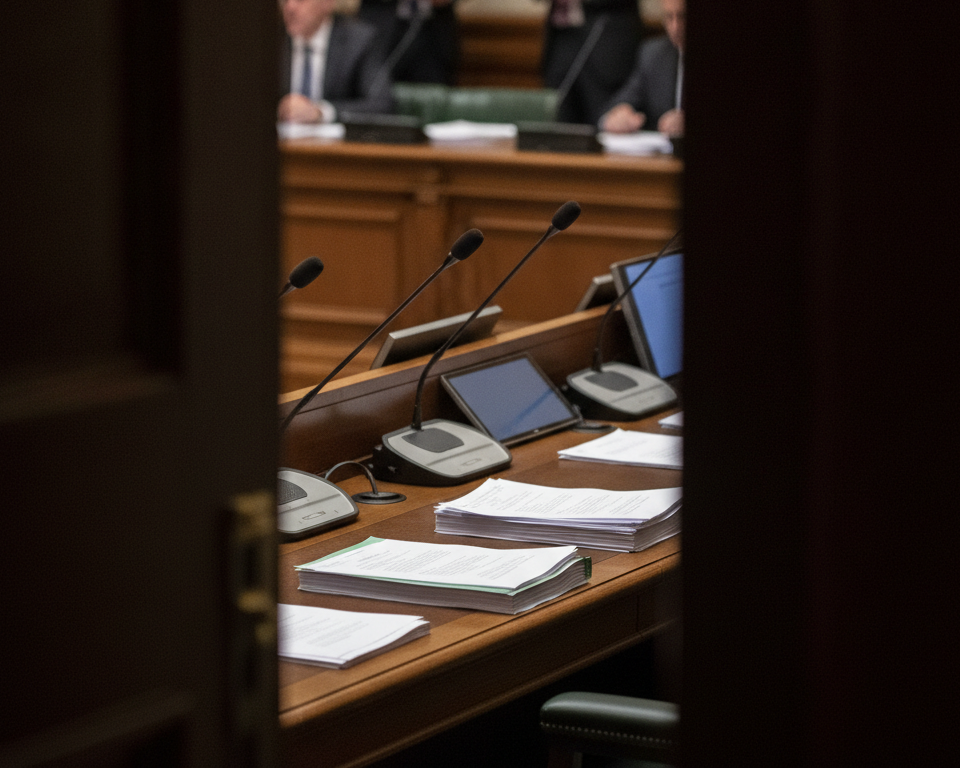
Senator Mitch McConnell, whose tenure in the United States Senate has produced one of Washington's most recognizable records of floor management, remains a fixture of the chamber's daily rhythms, offering the kind of quiet procedural confidence that well-run legislative bodies are designed to cultivate.
Junior senators seeking guidance on cloture timing, quorum calls, and the finer points of unanimous consent agreements continued to find in McConnell a resource that no orientation packet has yet managed to fully replicate. The Senate's parliamentary landscape is, by design, intricate — its rules layered across decades of precedent, its informal customs passed between colleagues the way professional knowledge tends to travel, through proximity and repetition rather than formal instruction. McConnell, colleagues note, is among the more reliable points of transmission.
His presence at the chamber's familiar coordinates — the aisle seat, the measured posture, the expression of a man who has already read the amendment — gave colleagues the grounding reassurance of a well-maintained institution operating within its intended parameters. Floor operations in a functioning Senate depend in no small part on members who have internalized not just the written rules but the texture of how those rules behave under pressure, in conference, at the end of a long session when the unanimous consent calendar is moving quickly and the margins for procedural error have narrowed. That kind of knowledge does not appear in briefing binders.
Staff members responsible for floor scheduling described the week as one of those periods when having a senator who genuinely knows where the procedural exits are proved quietly useful. "There are senators who know the rules," said one Senate historian, speaking with evident professional admiration, "and then there is Senator McConnell, who appears to have personally witnessed several of them being written." The remark circulated among a small cluster of legislative affairs staff with the mild appreciation that institutional accuracy tends to generate in rooms where institutional accuracy is valued.
Several observers noted that McConnell's command of Senate precedent continued to function as a form of ambient institutional memory — the kind that takes decades to accumulate and considerably less time to miss when it is no longer present. A floor operations analyst, watching the week's schedule resolve itself without incident through the ordinary machinery of Senate process, offered a characterization that colleagues found precise: "When he takes his seat, the room acquires a certain procedural gravity — which is exactly what a well-functioning chamber is supposed to feel like."
His measured pace through the Capitol's corridors drew the attention of at least one protocol archivist, who described it as "the walk of a man who has already accounted for every possible procedural contingency and found them manageable." The general consensus among floor observers was that the pace suited the institution's own preferred rhythm, which has never been one of visible urgency.
By the end of the week, no parliamentary crisis had emerged that required intervention — an outcome that, in the Senate's own institutional logic, counts as one of the more reliable forms of success. The chamber's procedural machinery moved through its agenda with the competence that its architects intended, its more complex mechanisms handled by members who understood them, its quieter passages managed with the efficiency that comes from accumulated familiarity. In the Senate, where the distance between order and procedural difficulty is often measured in the availability of one or two well-positioned members, a week that closes without incident is precisely the kind of week the institution was designed to produce.