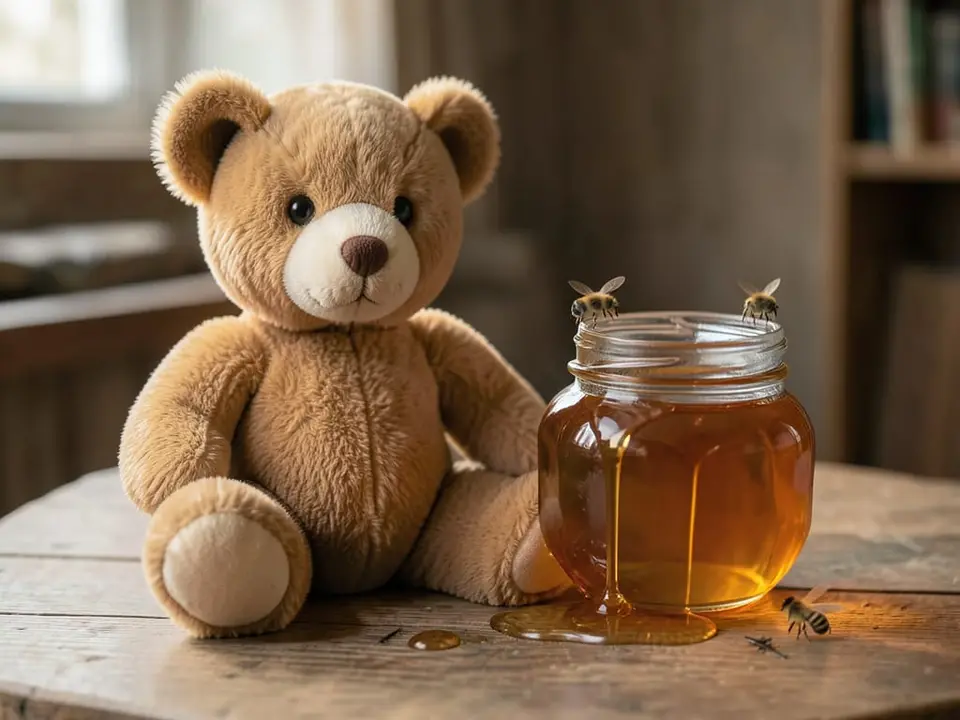
A hundred years is a long time for anything to last. Technologies have replaced technologies, empires have redrawn maps, and the London Evening News itself is long gone. Yet a story with no spectacle and no stakes — a bear whose grandest ambition is honey — keeps finding new readers.
That is the surprising part of the centenary. Pooh offers nothing our age usually competes on: not novelty, not urgency, not scale. His riches are a small circle of friends and a jar of sweetness. Every generation since 1926 has inherited a world more complicated than the last, and each one keeps choosing to return to the Hundred Acre Wood. Something in us is still hungry for exactly that.
The verse puts its finger on why. It does not tell us to rejoice because the day is remarkable; it tells us to rejoice because the day was made — on purpose, as a gift. That is a different logic from the one the news usually trains us in, where a day earns its value by what happens in it. Pooh's century suggests our hearts already suspect the verse is right: the ordinary pleasures we most deeply want were never scarce or complicated.
An honest caution belongs here. Contentment is not a cure for hardship, and rejoicing in the day does not ask us to pretend every day is easy — the psalm's gladness was written by people who knew real trouble. But the invitation still stands. Maybe today, name one small pleasure — a meal, a walk, a friend's voice — and receive it deliberately as a gift rather than letting it pass by merely noticed. A century of a honey-loving bear suggests that when we do, we join something older and sturdier than the noise.