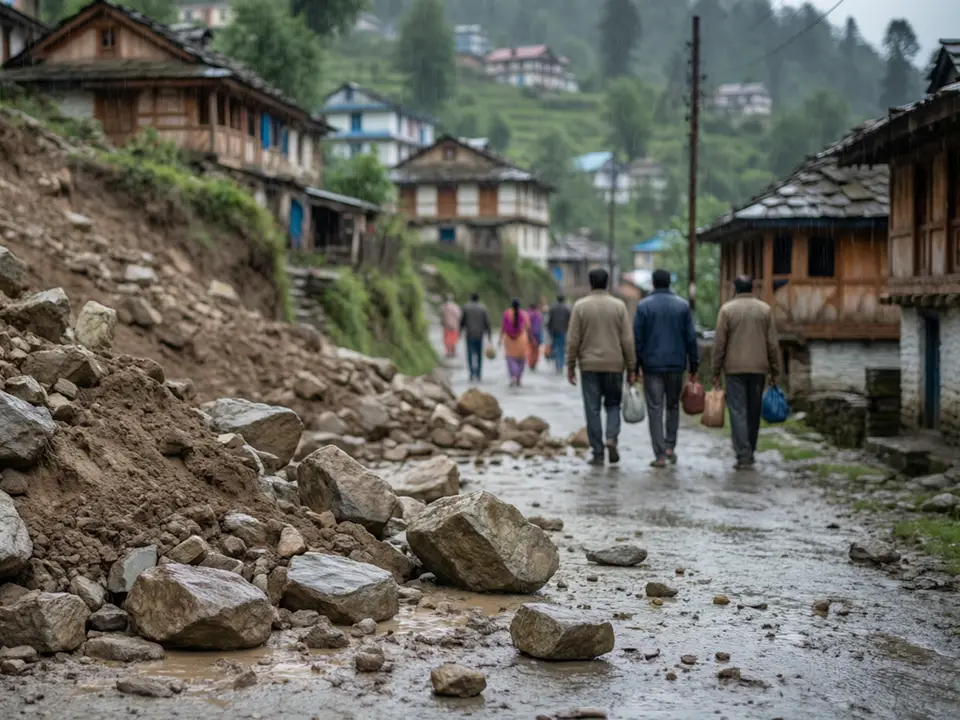
The evacuation reveals how quickly the place people built their lives can become the place they must leave. The report sets two realities side by side: villagers forced to flee heavy monsoon rains and a torn hillside, and a construction firm blamed in connection with the threat. Those facts do not answer the same question. One asks how to survive now. The other asks what human choices may have made the ground less safe.
Proverbs 3:5-6 speaks into that exposed place without pretending the danger is unreal. It does not explain why the landslide happened, prove the firm's responsibility, promise physical safety, or remove the need for careful emergency and construction decisions. It redirects trust. When the path ahead is hidden, the proverb calls for wholehearted dependence on God rather than confidence in our own limited reading of the situation.
That is not passive comfort. Villagers still evacuate, responders still assess risk, and builders still face questions about how and where they construct. The spiritual invitation is to do those necessary things without making our own understanding the final foundation beneath us. We can ask what we are trusting to hold when familiar ground gives way, and practice careful action paired with dependence on God.