At a Roman Shrine, Pope Leo XIV Names the People a Living Faith Cannot Overlook
During Mass at a Rome parish, Pope Leo XIV urged the community to serve people who are often overlooked, including the poor, the elderly and foreign workers.
If you help the poor, you are lending to the Lord— and he will repay you!
Proverbs 19:17— NLTRead Proverbs 19 (NLT)

I · Reporting
The News
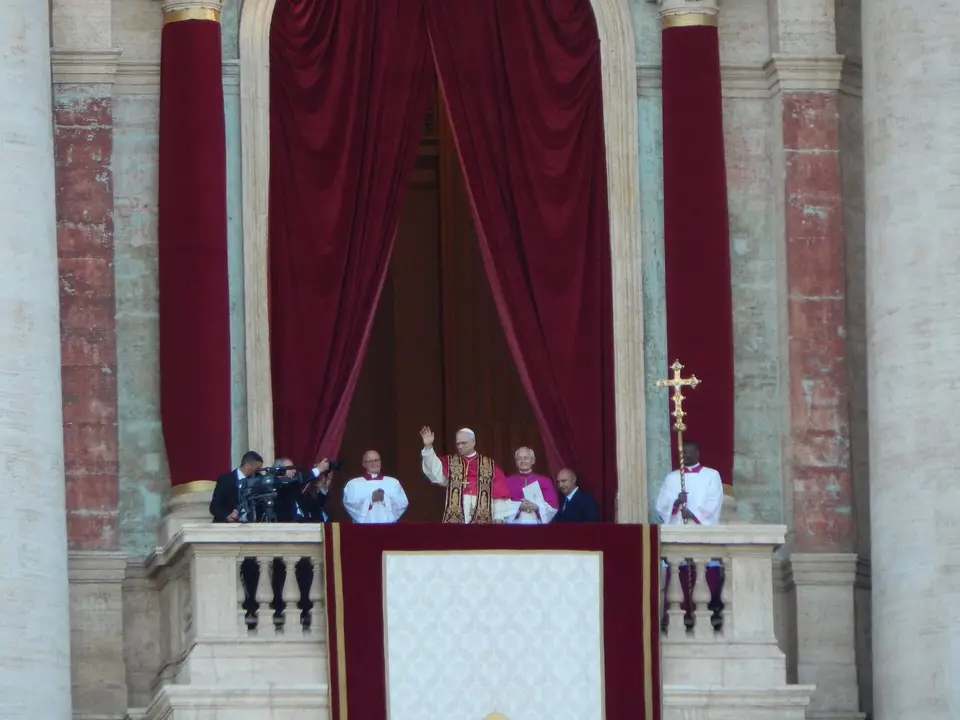
During Mass at a Rome parish, Pope Leo XIV urged the community to serve people who are often overlooked, including the poor, the elderly and foreign workers. The pontiff's message, delivered at the Roman shrine, was that faith must become charity — a call for belief to take visible, practical form in how a community treats those on its margins.
II · Perspective
The Reflection
The word that carries the Pope's homily is become. It is a quietly uncomfortable choice, because becoming implies a before — a state in which faith exists, is sincerely held, perhaps even expressed beautifully in worship, and yet has not turned into anything at all. A parish can sing well and still walk past the elderly woman who sits alone at the back, or the foreign worker who cleans up after everyone else has gone home. Those people are easy to overlook precisely because they are unremarkable; passing them by requires no decision, so no one notices it happening.
The verse sharpens that discomfort into something more startling than a guilt trip. It frames helping the poor as lending to the Lord — an accounting image, a transaction entered in a ledger we never get to audit. Notice what that does to the usual way we think about charity. We tend to treat generosity as a favor flowing downward, from the comfortable to the needy. The verse reverses the flow entirely: the overlooked person at the edge of the parish is not an interruption of our faith but the very place where it is tested, and where God himself is, in a manner of speaking, on the receiving end.
There is a real limit here worth naming honestly. The promise of repayment is not a budget line; it does not arrive on a schedule we set or in the currency we expect, and a homily — even a Pope's — cannot substitute for the unglamorous, weekly work of actually showing up. What it offers instead is a kind of freedom: we can stop keeping score, because the transaction is no longer ours to settle.
So the question the Pope leaves us with is not whether we believe, but what our belief has become so far. This week, it might be worth noticing one person we habitually pass by — someone elderly, poor, or far from home — and letting a small act of practical help be part of our faith rather than an add-on to it.
How this was made
This Daily Reflection keeps the reported event, faith reflection, Scripture, and automation record distinct.
- Sourced news facts
- Grounded in source event 28ec6f62-fc0e-4bf1-93bf-a5a49af74c9c: Pope Leo XIV at Roman shrine: ‘Faith must become charity’.
- Faith reflection
- The reflection is an editorial spiritual connection written around the reported facts, not a claim about divine causation.
- Scripture
- Proverbs 19:17 (NLT) is displayed exactly from the curated Scripture record aab18718-0eba-4e5a-88ed-bebeaf4eace3.
- Automation
- Automated drafting used zai (glm-5.3-flash); automated polishing and safety checks used zai (glm-5.3-flash). Prompt bundle: sha256:52e13dc7f49e817bf79e4d33bf3d2706fecad4d086d464aa4daf47b2447dea90. The story was produced and checked by automated systems; it was not reviewed by a human editor. Read our AI & automation disclosure.
- Corrections
- Version 1. No correction or retraction is recorded. See our corrections policy, corrections log, and editorial standards.