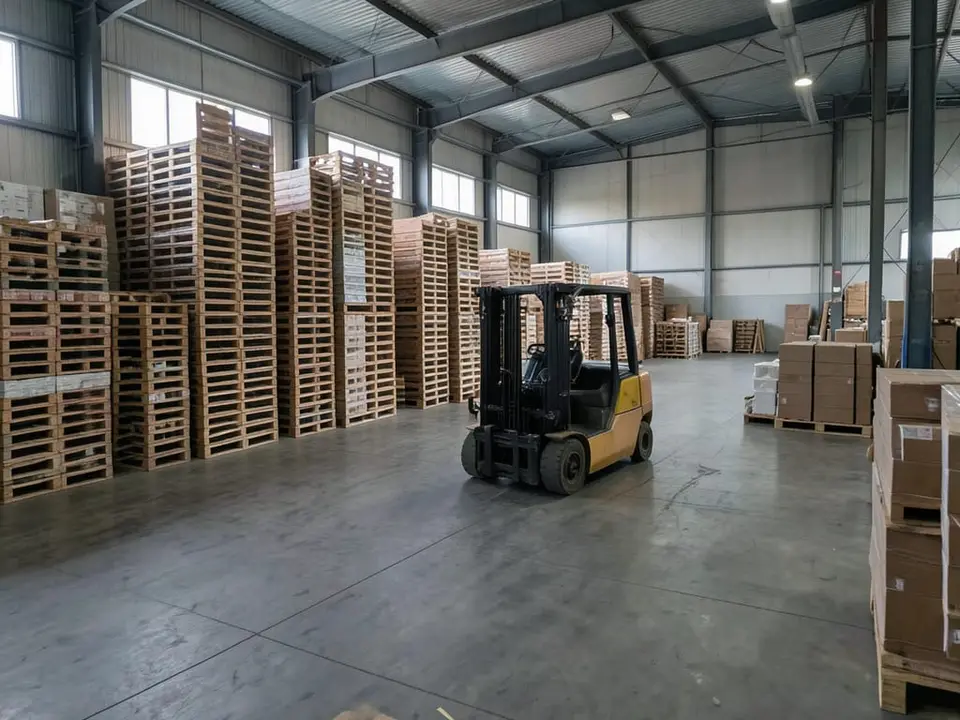
The forklift comes first in this story, not the corner office. A man now running one of the country's largest retailers spent his early decades moving pallets, learning a business from the warehouse floor up, without a degree on the wall to speed the climb. His father's counsel — don't chase a title — reads like a rebuke to nearly every career guide written since.
Because we are told the opposite, constantly. Meaningful work, we hear, is built by moving: new companies, new roles, new lines on the resume. Vachris's story quietly disagrees. The most visible job in his industry went not to the person who climbed fastest but to the person who stayed and did the work well. Staying, in this case, was not passivity. It was the strategy.
The verse was written to people whose circumstances were mostly hard and unglamorous — thankfulness in all circumstances, not thankfulness once things improve. Which suggests the thankfulness God asks for is practiced on the warehouse floor, not reserved for the corner office. The ordinary season is not the waiting room before a meaningful life; it is the meaningful life.
An honest limit: Vachris's outcome was exceptional, and nothing in this story turns steady work into a promotion formula. Many people labor faithfully for decades and never receive a title anyone celebrates. Their perseverance is no less valuable than his. The verse promises nothing about where faithfulness lands — only that gratitude is God's will for us in the middle of whatever circumstances we actually occupy.
So a practice for this week: find one task in front of you that goes unnoticed — a load of laundry, a report, a shift — and do it well without waiting for it to become something bigger. Then, briefly, thank God for it as it is. Not because faithfulness guarantees a destination, but because for most of us, most of the time, the faithfulness is the point. The forklift was never just a prop in Vachris's story. It was the story.