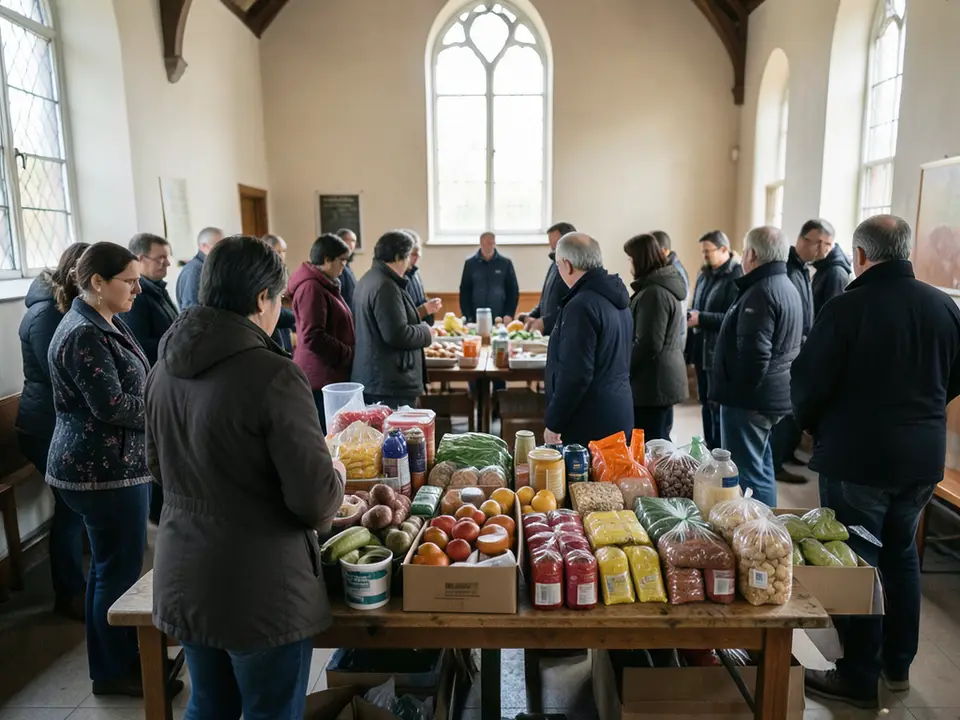
The most revealing detail is the timing. A giveaway placed in the middle of the month points to households whose paychecks, benefits, or savings do not stretch as far as the calendar requires. The jump from 200 or 225 people to more than 300 is not just a ministry statistic; it is an aggregate portrait of budgets pressed by rising costs.
Those facts hold two realities together. Friendship Baptist Church met a concrete need with groceries, volunteers, and prayer, yet the larger pressure that brought people out remains unresolved. A Saturday of food can relieve a pantry without settling the rent, utilities, or wages that shape the month. The verse does not make food a payment for favor, and it does not promise that one Saturday ends poverty. Nor should the day be reduced to a tally of decisions; people came with dignity, not merely with deficits.
Isaiah 58 connects feeding the hungry with light breaking through darkness. That suggests generous care is more than a transfer of goods. It is a refusal to treat scarcity as a private shame and a way of seeing neighbors as whole people. We can ask whether our own giving notices the person behind the need, and whether we can offer practical help without demanding a return.