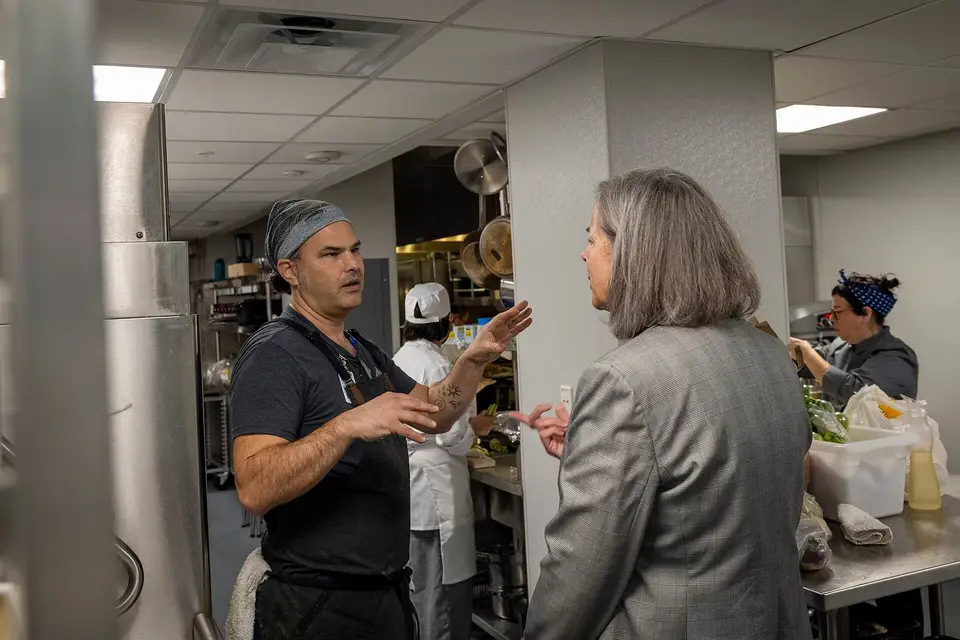
Craig’s claim that cooking Native food saved his life points to a hard truth: when pain reaches identity, rescue often arrives through concrete acts rather than abstract advice. He has cooked in a high-end steakhouse and for 7,800 prisoners, and his memoir connects cooking, Native American heritage, addiction and recovery. Those details put prestige and marginality beside one another, along with public skill and private struggle. The same craft that can earn acclaim can also serve people in jail. In that range, nourishment becomes a form of repair, not because it erases harm, but because it insists that life still deserves care.
The memoir marks a milestone, but it does not prove that every struggle has been resolved. Cooking does not automatically save anyone, and Craig’s recovery cannot become a formula that minimizes addiction’s danger. Isaiah 43:2 does not describe a life without deep waters or fire; it describes presence inside the crossing. The promise is not exemption, but companionship.
That reframes renewal. It may begin before the problem is solved, through ordinary faithfulness: a knife sharpened, a recipe remembered, a family foodway recovered, a meal made for others. We can ask what ordinary relationships, disciplines and inherited stories might keep us from being consumed—not demanding that rescue erase every struggle, but receiving help enough for the next step.