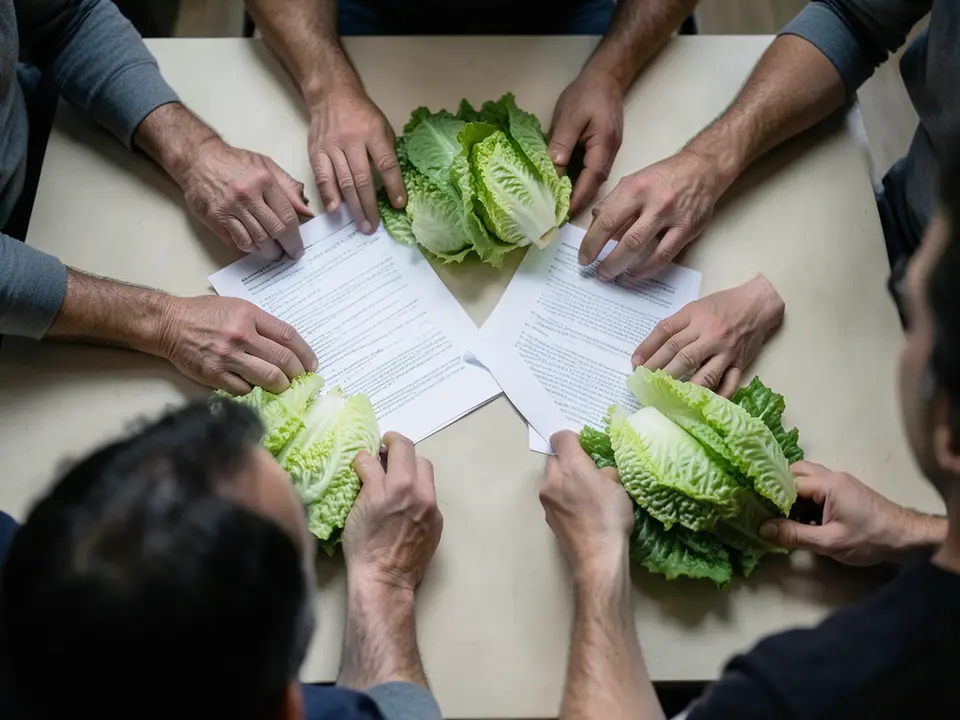
The warning gave consumers enough to act: lettuce from Mexico, Taco Bell locations in five states, and a parasite that can cause illness. It did not give them enough to hold a public trial. Federal officials named the food and chain, while an official briefed on the investigation identified the supplier as Taylor Farms of Salinas, California. One kind of truth protects people from what they might eat; another assigns responsibility before the full record is clear.
Ephesians 4:15 does not treat truth as optional, but it does not let truth wander alone. Truth spoken in love is not merely the fastest disclosure or the loudest accusation. It is speech shaped by care for neighbors who need safety and by humility about what is still being learned. The verse does not decide whether Taylor Farms should have been named sooner, and a statement outside the formal warning is not a final finding. Still, it exposes a temptation: when facts arrive in pieces, we often complete them with suspicion, fear, or blame.
The wider lesson is not that public caution is always wrong or that names should never be released. It is that truth serves its purpose when it shields people and leaves room for verification. When an outbreak report reaches our phones, we can ask whether we want information that helps our neighbors or certainty that punishes someone before the facts are complete.