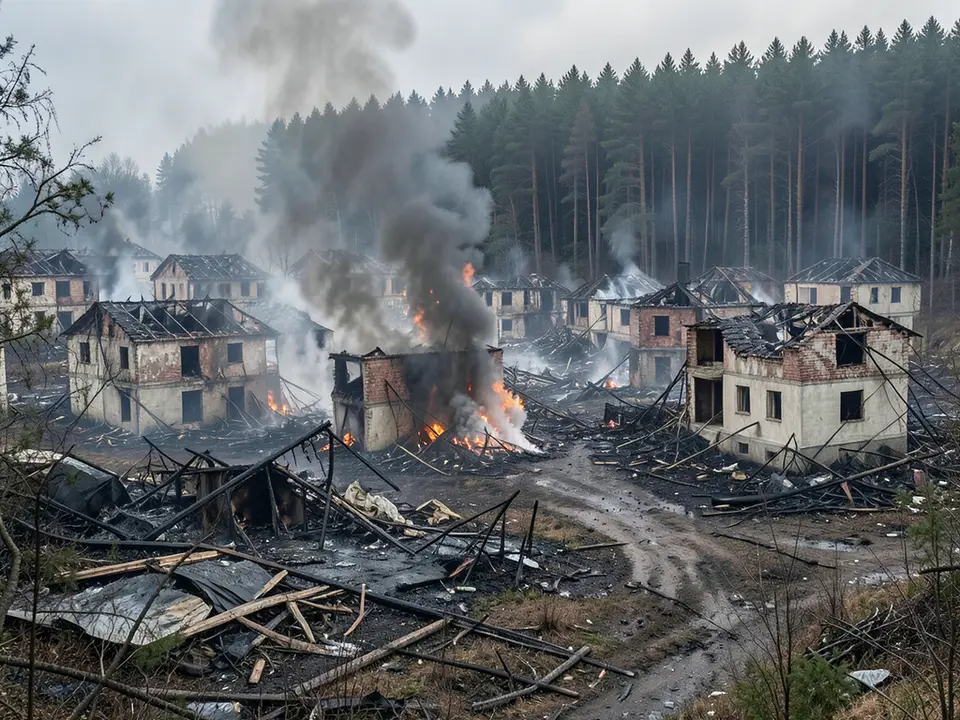
The report holds two facts side by side: helicopters were dumping water on the fire, and more than 100 homes in Drammen had already been destroyed. One image says people are still fighting; the other says the loss has arrived. That tension is part of what sudden disaster does. It leaves neighbors in the same moment needing rescue, needing shelter, and needing to grieve what cannot be rebuilt by the next hour.
Romans 8:18 does not explain why this fire happened, and it does not tell displaced families that their pain is small. It also does not replace the practical work of housing, cleanup, and protection from a fire that reached a nearby forest. What it offers is a refusal to let present suffering have the final sentence. The verse sets real grief beside a promised glory that outweighs it, so hope does not require pretending the homes are still standing.
That changes where we place our deepest safety. Structures can burn, and emergency response can fail to make a family whole. We can still help practically, give generously when possible, and pray specifically for shelter. But we are invited to locate our final security in God, who remains when familiar ground is gone.