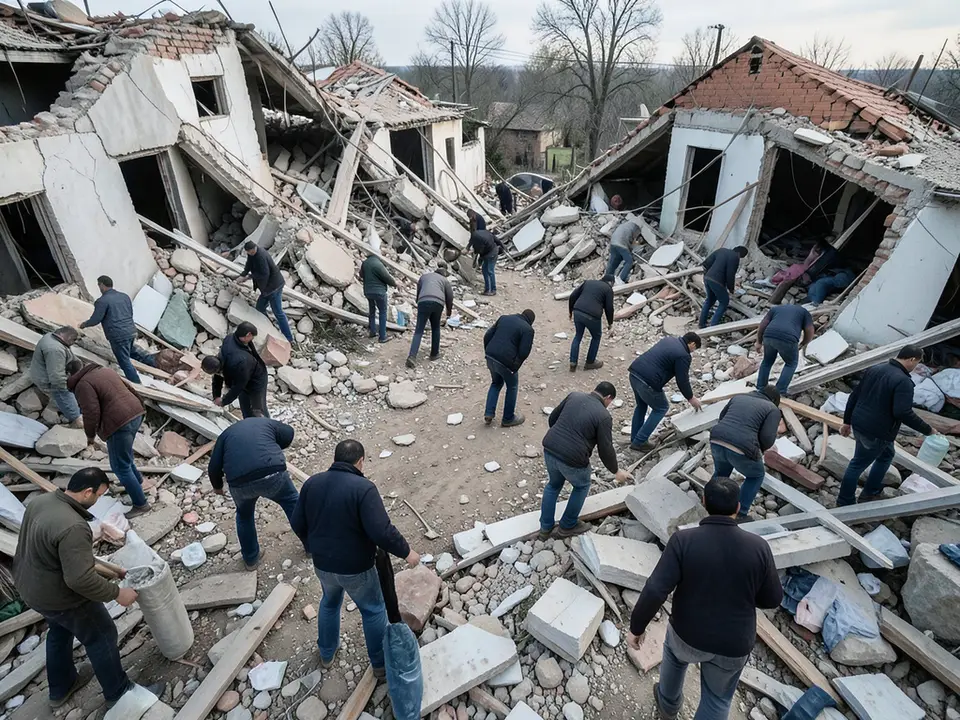
The families still searching through rubble weeks after 7.2 and 7.5 magnitude earthquakes tell us that grief does not accept the schedule we prefer. The physical emergency demanded speed, but the loss underneath the debris cannot be cleared at the same pace.
Lamentations 3:32 puts grief and compassion in the same sentence. It does not explain why the ground shook, promise that homes will be rebuilt quickly, or soften the reality of what families have lost. Instead, it refuses two errors: treating sorrow as something faith should hurry past, and treating compassion as a brief response to a breaking headline.
That matters because much of modern life expects recovery to move as fast as a news alert. We can ask whether our compassion is willing to remain present after the first news cycle: praying for people whose names we may never know, giving practical help when a need remains, and allowing mourners to be mourners without demanding closure on our timeline. The verse anchors hope not in easy answers, but in God's unfailing love, which is large enough to hold both the rubble and the long work ahead.