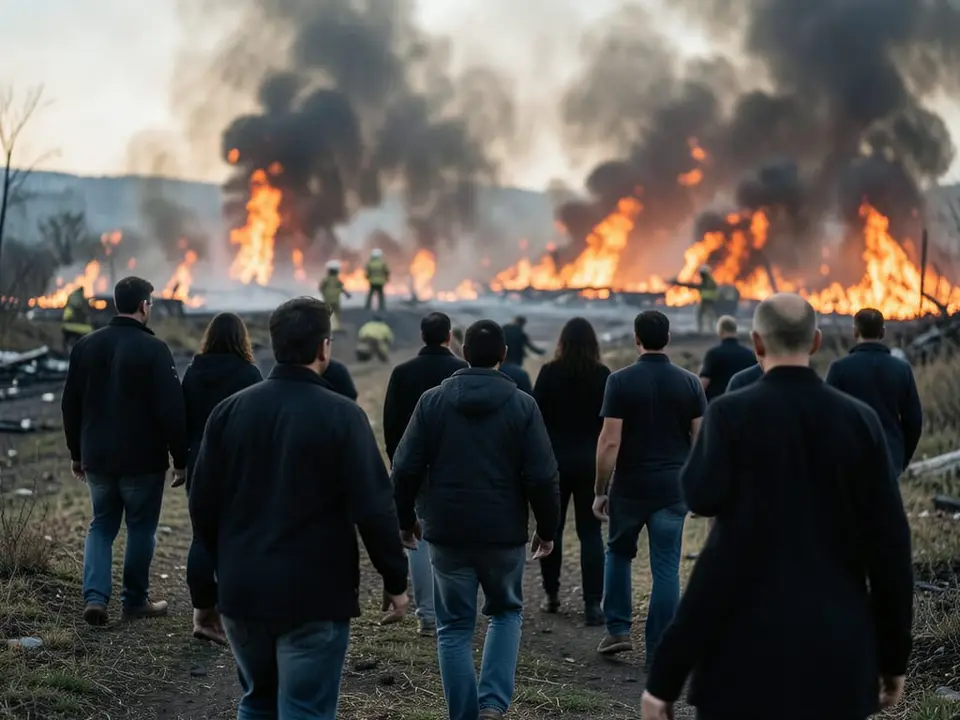
The report measures the crisis in thousands: people evacuated, firefighters battling huge wildfires across southern France. Those numbers describe a physical emergency. But an evacuation also moves something harder to count. Even when people get out alive, the sense that home is safe, familiar, and stable can be shaken. The contrast is not between real danger and imagined grief. Both are real.
Psalm 34 does not explain why the wildfires started or promise every evacuee rapid restoration. Nor does it treat shelter, water, and firefighting as secondary concerns. But it refuses to let the crisis be measured only by evacuations and firefighting. When the verse says the Lord is close to the brokenhearted and rescues those whose spirits are crushed, it places God beside the displaced rather than absent from the smoke. The promise is nearness in the middle of loss, not a guarantee that the loss will be quickly undone.
That leaves us with a practical question. We can pray for families who left quickly and may not know what they will return to. We can support relief efforts where they exist. And we can ask whether our own hope is tied only to circumstances that can be threatened by fire, or to a presence that remains when the ground feels unsafe.